

Is Glassblowing Dangerous? The Real Risks
If you have ever watched a glassblower at work, the obvious hazards are hard to miss. There is intense heat, molten material, open flames, sharp edges and fragile components under stress. So, is glassblowing dangerous? The honest answer is yes - it carries real risk. But in a professional workshop, danger is not the same as disorder. The work is controlled, disciplined and managed through training, process and the right equipment.
That distinction matters, particularly for commercial buyers and project teams assessing a manufacturing partner. Precision glassblowing for laboratory, petrochemical, lighting and architectural applications is not an improvised craft activity. It is a skilled industrial process with established safety practices designed to protect both the operator and the finished product.
Is glassblowing dangerous in practice?
Glassblowing is dangerous when it is carried out without proper safeguards, when operators are inexperienced, or when the process is treated casually. In a competent workshop, the main hazards are known, anticipated and reduced to acceptable levels through routine controls.
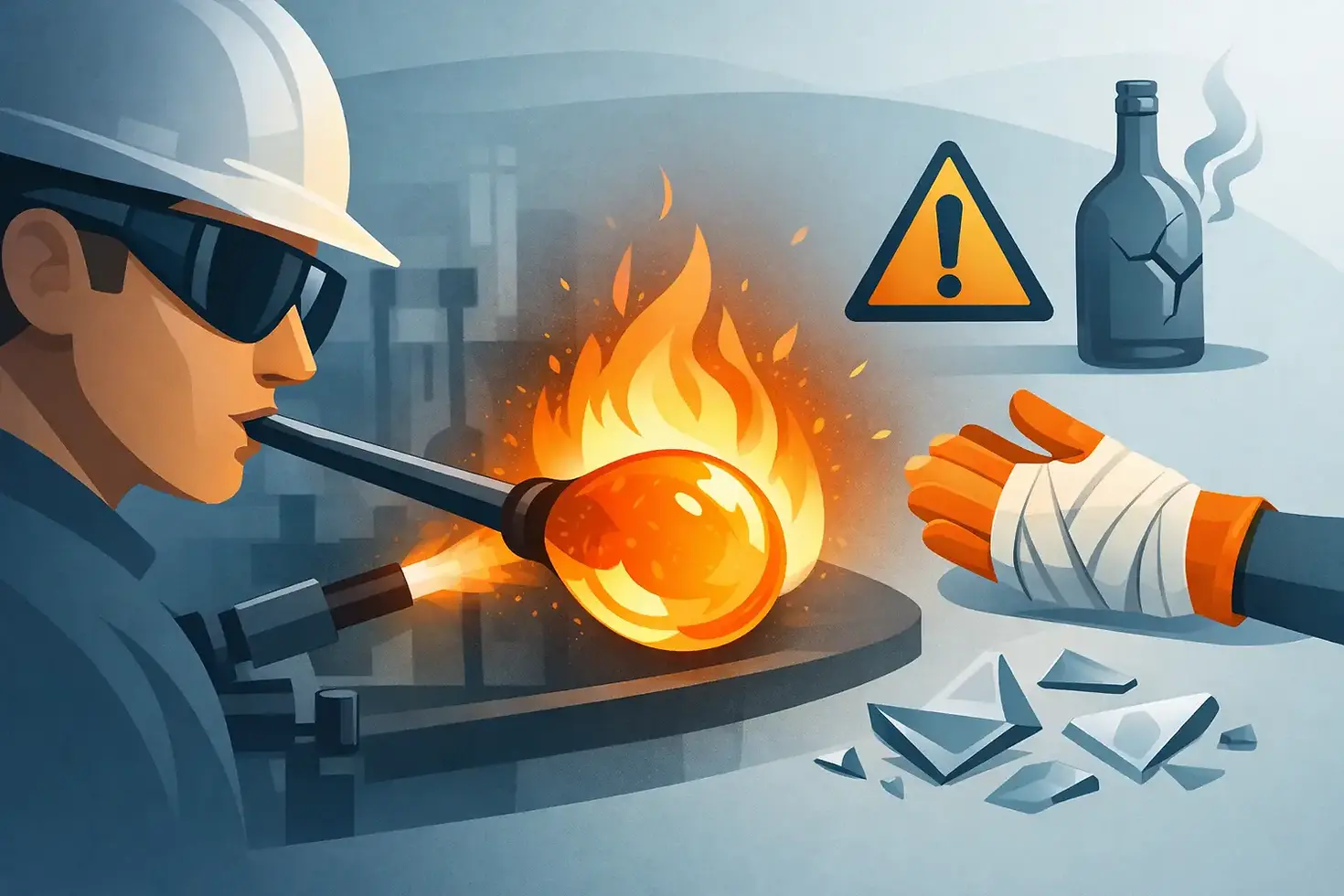
The danger comes from several sources at once. Heat is the most immediate. Burners, torches, kilns and hot glass all present a clear risk of burns. Unlike many materials, glass can remain dangerously hot while appearing unchanged to the eye. A freshly worked component may not glow brightly, yet still be hot enough to cause serious injury.
There is also the risk of cuts and punctures. Glass tubing, rod and formed components can fracture during handling, cutting or assembly. When glass breaks, the edges can be exceptionally sharp, and breakage may occur suddenly if the material is under thermal or mechanical stress.
Then there are the less obvious risks. Repetitive movement, eye strain, fumes from certain materials or processes, and manual handling all need to be considered. In specialist manufacturing, safety is not only about avoiding dramatic accidents. It is also about preventing the smaller, cumulative problems that affect consistency, staff welfare and production quality over time.
The main hazards in professional glassblowing
Heat and burns
This is the hazard most people associate with glassblowing, and with good reason. Working temperatures are high, and direct contact with hot glass, tools or burner equipment can cause severe burns. Even nearby surfaces can retain heat. A disciplined workshop relies on clear bench organisation, designated cooling areas and constant awareness of what is hot, what is cooling and what is safe to handle.
Breakage and flying fragments
Glass is workable and precise, but it is also brittle. If it is heated unevenly, cooled too quickly or subjected to impact, it may crack or shatter. In tubing and pressure-sensitive assemblies, failure can happen with force. Eye protection is therefore not optional. For technical work, especially on bespoke items with joints, seals or calibrated sections, controlled heating and annealing are central not just to quality but to safety.
Fumes and air quality
Not every glassblowing process produces significant airborne hazards, but some do. Depending on the glass type, coatings, sealants, cleaning agents or burner set-up, fumes can be an issue. Good ventilation and extraction are part of a properly run workshop. This is especially important where production is regular and prolonged rather than occasional.
Eye strain and light exposure
Working glass often involves bright flame, glare and close visual attention. Over time, this can place strain on the eyes. In some operations, specialist eyewear is used to improve visibility and reduce exposure to intense light. Precision work depends on being able to see clearly, so visual protection serves both safety and workmanship.
Strain from posture and repetition
Professional glassblowing can involve long periods at the bench, repeated hand movements and sustained concentration. This is less visible than a burn or a breakage incident, but it is still relevant. Ergonomic set-up, suitable seating or standing positions, and sensible workload management help reduce fatigue and maintain output quality.
Why experience makes such a difference
Glassblowing is not safe simply because protective equipment is present. Safety depends heavily on judgement. Experienced glassblowers understand how different glass types behave, how heat moves through a piece, where stress is likely to develop and when a component is becoming unstable.
That knowledge is practical, not theoretical. A skilled operator can often recognise a problem before it becomes an incident - a section overheating, a wall thinning too far, a seal pulling unevenly, or a component cooling too quickly. In technical manufacturing, this matters because safety and product integrity are closely linked. Poor technique increases the chance of injury and the chance of producing a part that fails in service.
This is one reason established workshops retain value in specialist supply chains. Heritage in itself is not a safety system, but decades of disciplined practice build methods that are difficult to replicate quickly. A manufacturer such as Aimer Products, working across scientific and industrial glassware, relies on that combination of trained hands, repeatable process and workshop control.
How professional workshops reduce the risks
A serious glassblowing operation does not remove all danger. What it does is reduce exposure, standardise good practice and create an environment where risks are understood before work begins.
Training is the first line of defence. Operators need to know not only how to shape glass, but how to handle burners safely, inspect tools, identify defects, manage stress points and respond if a piece fails. Competence is built through supervised practice and routine.
Equipment is the next factor. Proper eye protection, heat-resistant tools, suitable clothing and maintained gas systems all matter. So does workshop layout. Clear work areas, safe storage for tubing and finished items, controlled cooling procedures and reliable ventilation are not cosmetic improvements. They are part of the production system.
Process control is equally important. Different glass compositions require different working methods. Borosilicate, for example, is valued for its thermal resistance, but it still requires correct heating and cooling. Rushing a job, using the wrong flame conditions or skipping annealing can create hidden weaknesses. In commercial manufacturing, that is unacceptable for safety reasons and for performance reasons.
Is glassblowing more dangerous than people assume?
For the general public, glassblowing is often seen as either highly romantic or highly hazardous. The reality sits between those extremes. It is neither harmless nor reckless. Compared with many office-based activities, it is obviously more dangerous. Compared with other hot-work industrial processes, it is a specialist trade with manageable risks when run properly.
The greater misconception is that danger is confined to the person at the torch. In reality, poor glassblowing practice can also affect downstream users. A badly made laboratory component, an unevenly stressed sight glass or an inadequately annealed lighting element may present reliability issues later. That is why competent fabrication standards matter to buyers. Safety begins in manufacture, but it does not end there.
What buyers should look for in a glassware supplier
If you are sourcing bespoke or technical glass components, asking whether glassblowing is dangerous is sensible. The more useful follow-up question is how the supplier manages that danger while maintaining quality.
Look for evidence of experience in the type of work you require. Laboratory and petrochemical glassware call for different practical understanding from decorative studio pieces. Ask about material selection, tolerances, annealing, inspection and the handling of custom specifications. A capable manufacturer should be able to discuss process clearly and without vagueness.
It is also worth considering consistency. One successfully made sample is not the same as dependable production. A disciplined workshop should be able to produce repeat work with the same care applied to safety, dimensional accuracy and finish.
The right supplier will not pretend there is no risk in glassblowing. They will show, through their methods and their results, that risk is being managed by people who understand the material properly.
Glassblowing deserves respect. It involves heat, skill, judgement and control in equal measure. When those elements are in place, it becomes not a reckless process, but a reliable one - and that is exactly what serious buyers should expect from a specialist glass manufacturer.


Comments